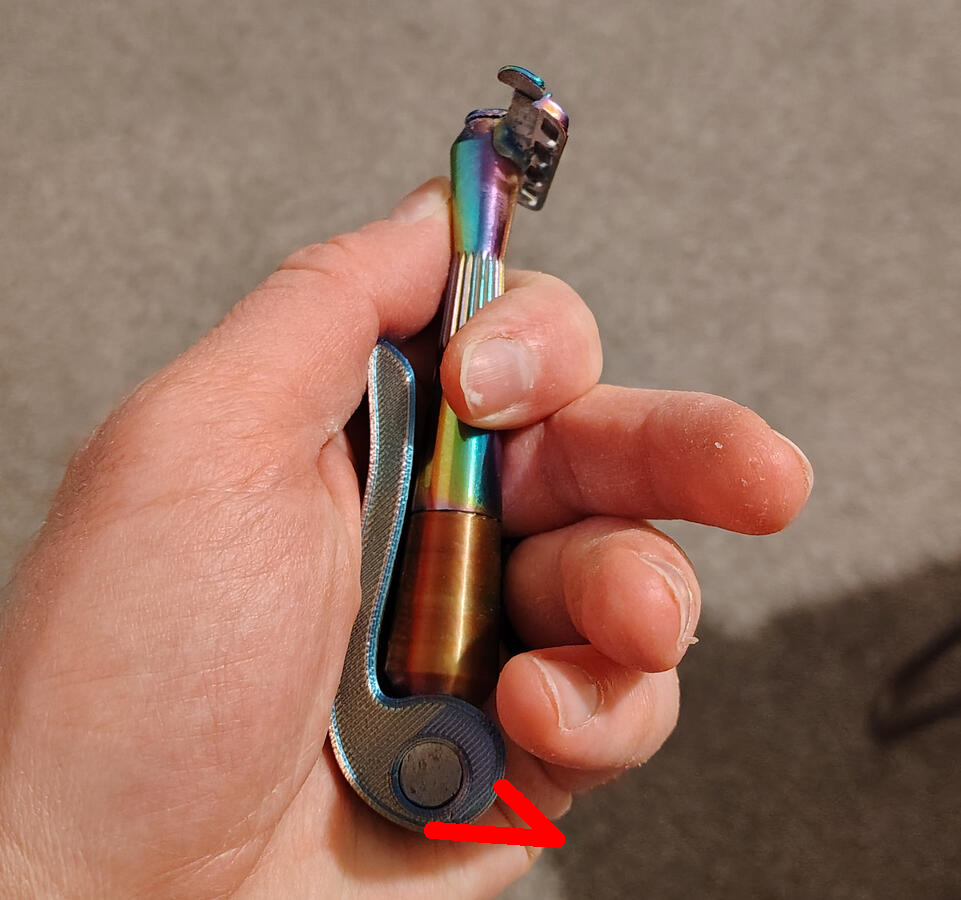
I wasn’t sure where to put this design review, so it has been sitting here a long time since I wrote it. Hopefully this is still useful. It’s possible the company has already fixed these issues in the intervening years, but I fixed my razor instead of buying a new one, so I wouldn’t know. If I wasn’t confident that this was a failure of design, I would not want it in my design blog, so I guess I’m lucky there. Actually, now that I have fixed the design a bit I am pretty happy with the razor again, too.
About two years ago my wife was target-advertised Leaf razors, right around when I was about to replace my normal plastic disposable razor. The quantity of plastic wrapped around the metal was really irritating to me, so I decided to buy a Leaf razor. I bought their 3-blade Leaf razor, and I really liked it. I STILL really like the 3-blade razor, and I use it for shaving in the shower and would definitely recommend it: it’s got a huge plate on the end that keeps all the blades in line and a spring that feels like it applies just the right amount of pressure. I have never cut myself with it, and it gets rid of armpit hair great.
Unfortunately, the head of the 3-blade razor was too big to really shave my upper lip with my schnoz in the way, so I tried their single-blade “Twig” razor. It took me a few tries to get the hang of shaving with a single blade, but once I realized it didn’t take almost any pressure to cut I got used to it. I liked it so much I designed and 3D-printed a little stand for it.
From what I have experienced of the online shaving tech community, there are some toxic strains where people will blame the user for any problems. You cut yourself using a razor? You must not be using it right. You don’t have 30 minutes a day to go through a shaving routine? You just aren’t taking this seriously. Git gud. But design flubs are flubs, and lowering the threshold of “gud” is gud for everyone in the long run.
Design evaluation
First, the groundwork: what causes a razor to be unsafe? You’re holding a knife against your skin, and if you slide it side-to-side you will definitely cut yourself, so safety is relative here. It’s easy to cut yourself parallel to the cutting edge of the blade if you are not careful. One way I consider a razor to be unsafe is if, by dragging the blade perpendicular to the cutting edge across my skin with the gentle pressure, it will cut a line in the direction I am dragging it. No razor should behave that way. That’s what happened to the Joker.
So how does that happen? It will definitely happen if the blade is loose and flopping around in the razor. At that point, the outer corners of the blade could be lifted out of their “safety” position, and they could poke you in the face. Now, this is an extremely sharp blade, and you are going to be accustomed to a low threshold of discomfort while shaving. It’s entirely possible that, if the blade comes a bit loose, you could cut yourself and not even realize it. This is exactly what can happen with the Leaf Twig if it is either under-tightened OR over-tightened.
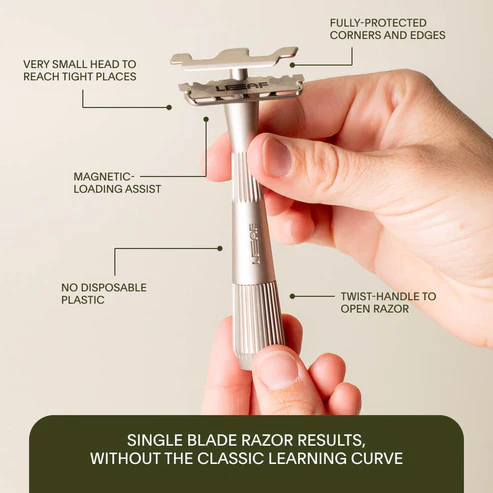
The Twig has an interesting design to hold razor blades. You open the lid up by twisting the back part of the handle clockwise and the top of the blade clamp extends up and then pivots to the side. I’m not sure what the point of pivoting to the side is, other than to look cool, which it totally does. It has the extend/pivot mechanical motion I would expect from the machine that serves James Bond martinis while he is driving. I don’t think any of Q’s machines went through enough use cycles to experience fatigue failure, though.
First problem: righty-loosy.
While this might be a style choice, users are always coached, when you want to tighten something, you turn it clockwise. It’s a fundamental rule that I would only break for cases where the fastener would be unscrewed by its use, like on the left side of a bicycle crank, where the pedal rotation would slowly unscrew a righty-tighty fastener. When I first started using the Twig, I cut myself on the neck once pretty bad. I had thought the handle felt loose when I picked it up, and absent-mindedly turned it clockwise to tighten it down, which actually loosened the blade.
This criticism can be written off as a learning curve, but I think the learning time can be pretty much eliminated with design.
I have to wonder if there isn’t some historical reason for this design choice. Is it an homage to some famous razor that worked the same way? Otherwise, I don’t understand this choice.
Second problem: so the part I hold moves?
The part of the handle that you turn anti-clockwise to tighten is also the part that a lot of your hand will rest against. That means that the way you hold the razor could very easily cause it to loosen, especially if you are nervously gripping it while you are getting used to it. I had this happen to me as well while dragging up the left side of my neck, because the angle is a little awkward and the skin presses against the shaving head in the direction that would loosen it. This is not a problem with the Leaf 3-blade razor, because it is tightened by a little screw behind the blades.
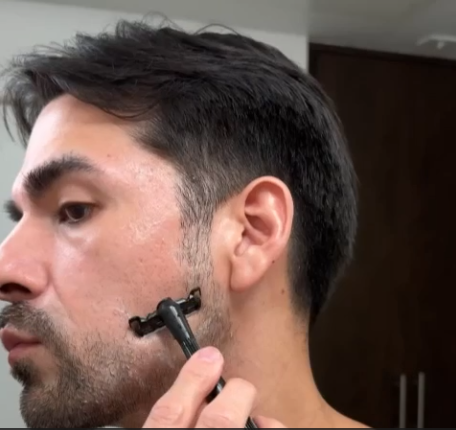
Notice how the person in this promotional video is holding the razor delicately with their fingertips way up the handle, which prevents the palm from spinning the handle by accident.
Again, though, I think this criticism could be written off. What am I, some kind of limp-wrist low-T loser who can’t tighten a screw?
Maybe.
But how do you know it’s tight? And what happens if you over-tighten it?
Third problem: torque wrench says what?
Let’s say I tighten the handle to the point that the blade is held nice and firm. How do I know that? It’s not like my fingers click when I achieve the target torque. I can’t visually tell that the blade isn’t loose, because it’s also held down by a little magnet to make inserting and removing it easier.
After tightening it, though, I can’t test if the blade is loose because the difference between a loose blade and a fixed blade is something like 0.4mm, and it’s really sharp. Anything I poke it with will could be cut or could damage the cutting edge.
What I need is some kind of feedback in the clamping mechanism to let me know that I have it tight. The 3-blade razor doesn’t have that feedback, but the screw is very small, and it is primarily just holding down the holding the blades in place, so it’s easy not to over-tighten it and stripping out the screw wouldn’t immediately cause a safety issue.
Again, though, my straw-man hater would say something like “What are you doing, BROTHER!? Give it THE BEANS!” In my head, my straw-man hater is Hulk Hogan. And I could certainly use my rippling muscles to err on the side of over-tightening it, but….
Fourth problem: borked it.
So let’s say that you consistently keep the razor nice and tight, snugging it up each time you use it to prevent that blade from getting loose. The most convenient way I found was to gently grip the shave head with my left thumb and forefinger while giving a little twist of the handle with my right thumb and forefinger.
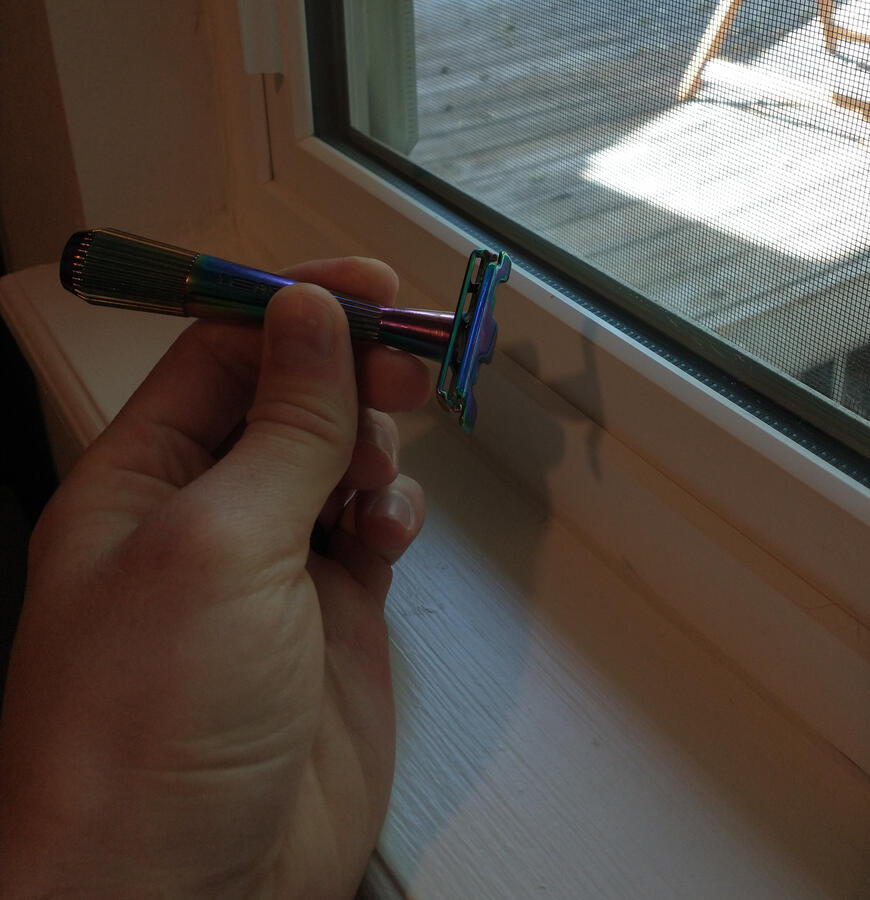
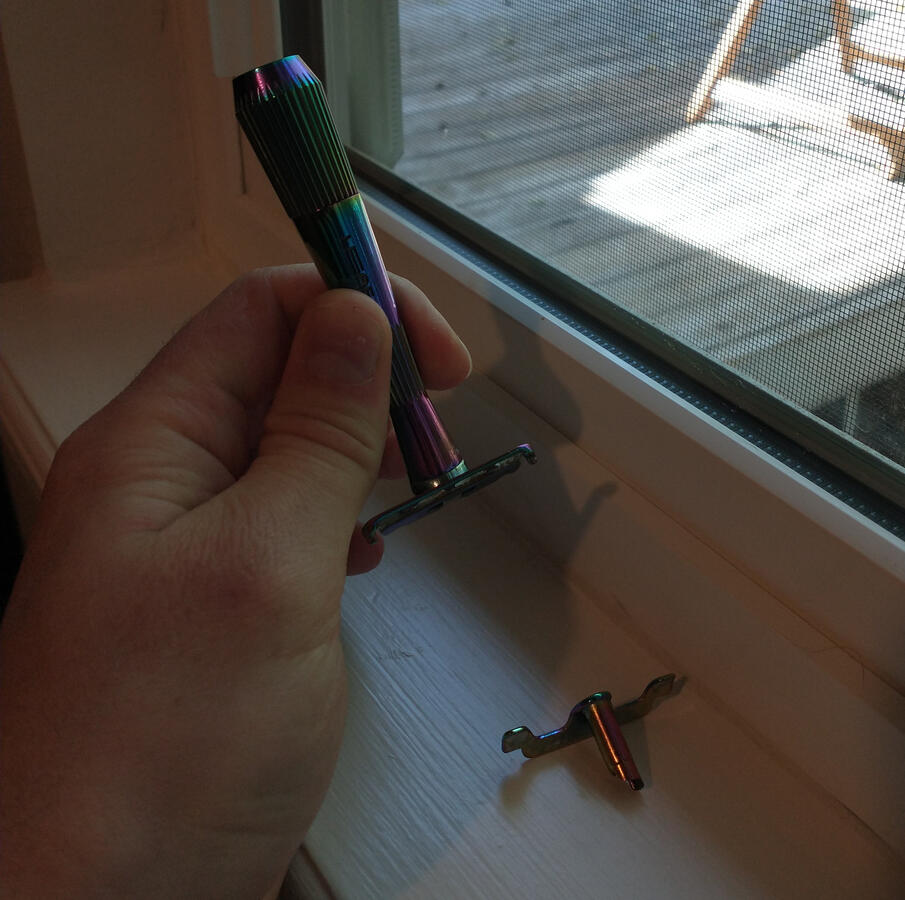
It is definitely possible, maybe even easy, to break the razor by over-tightening it. There is no adequate hard stop that prevents the knob from rotating past the limit. The thread of the screw is fine and well-lubricated, and it is quite easy to tighten the razor to the point of failure, given time. The lid part that actually pushes down on the razor blade is screwed radially onto a shaft inside the handle. When you over-tighten it, the metal around that screw holding them together can fail, snapping and releasing the lid part and the blade to float freely. However, the deformation or loose bits in the handle might still hold the lid in place superficially so that you cannot tell immediately that it is broken, and the magnet holding down the blade will make it look like it is still good to go.
If you use one of these and the handle starts to turn with less resistance than you expect, DO NOT USE IT. I would bet dollars to donuts the lid tube has failed, and you’re about to cut your face with an unsecured razor blade like me.
This fourth problem is the thing that really makes the Leaf Twig razor a menace. On the one hand, it needs to be tightened correctly to avert danger in either direction, but there is no feedback to show that it has been done correctly. Let’s take a look inside it to see exactly how I broke it.
Disassembly
To take this thing apart the right way, I think you hold the lid in place and turn the handle clockwise or something. Mine was already busted, so it was pretty easy to take apart. I was surprised to learn that the handle is actually threaded onto a counter-clockwise-threaded rod. At scale it doesn’t matter as much because none of the parts will be off-the-shelf, but there is not a large market for counter-clockwise screws, so off-the-shelf reverse-threaded parts are usually less common and more expensive.
Once the handle knob is removed, you can push the inner shaft up and use a pair of needle-nose pliers to unscrew the ring insert. Without the ring insert, you can just pull the guts out.
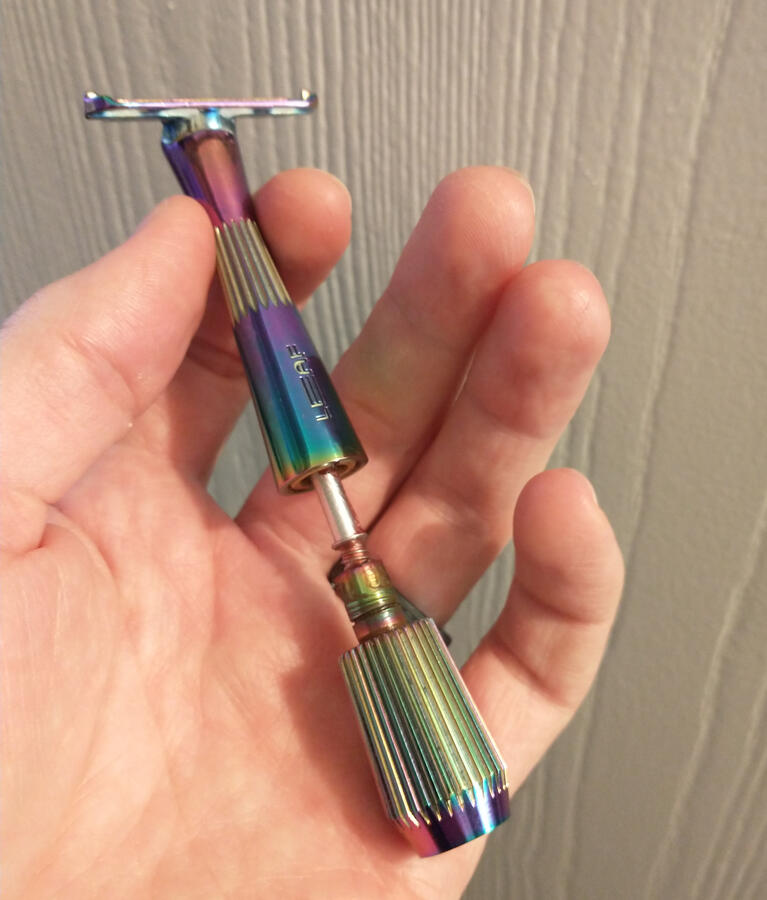
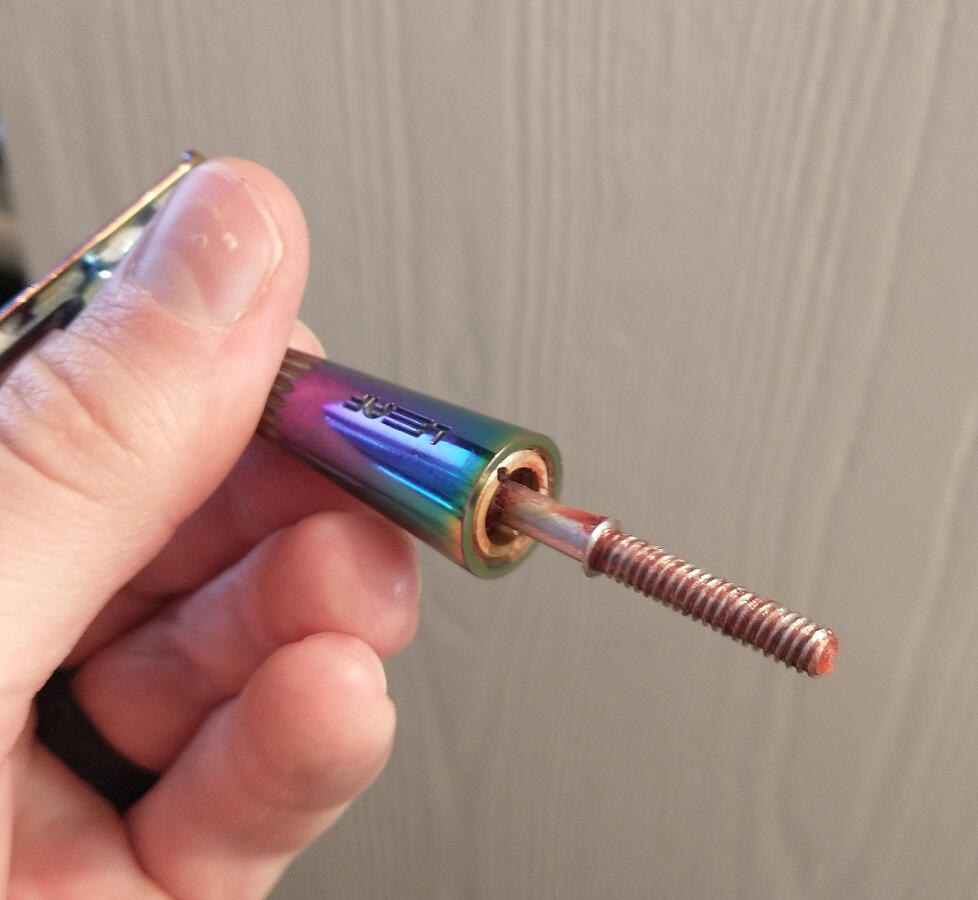
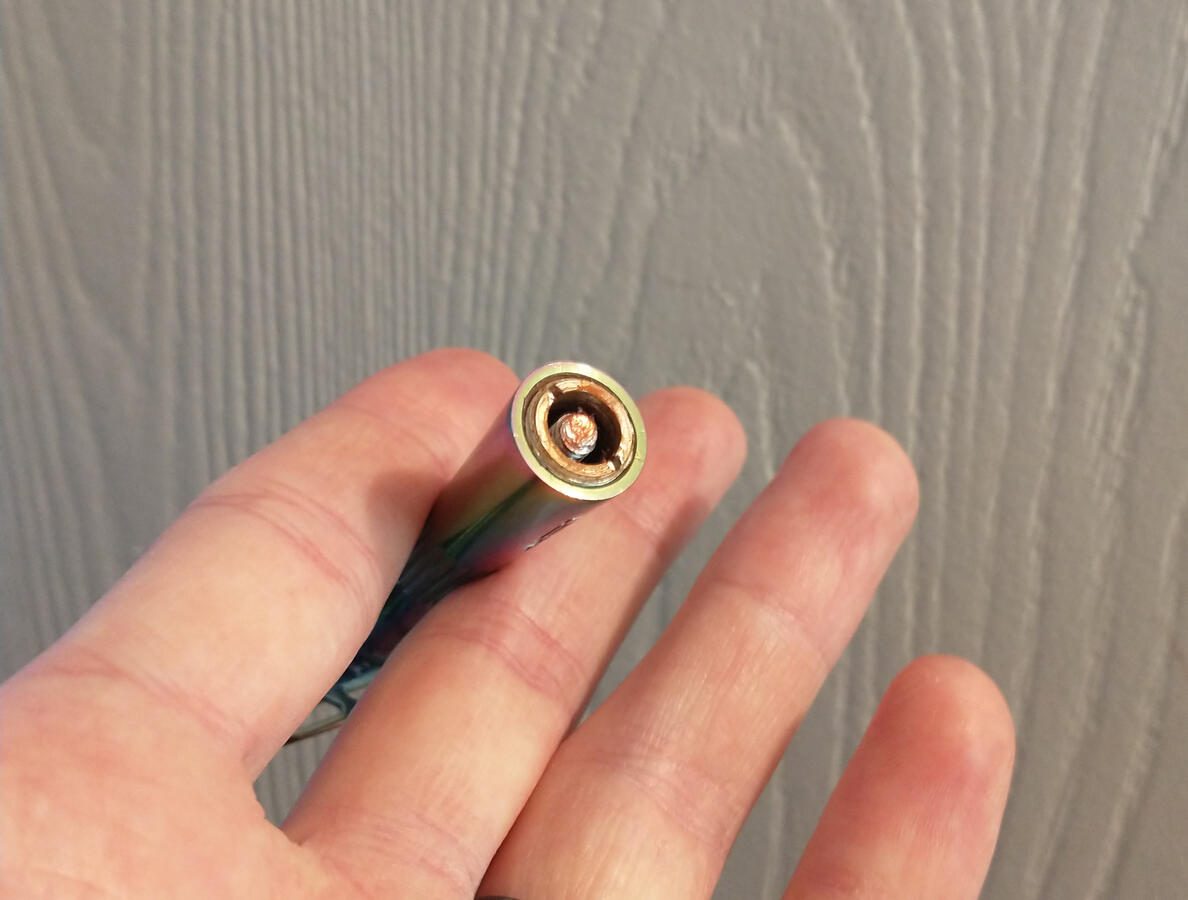
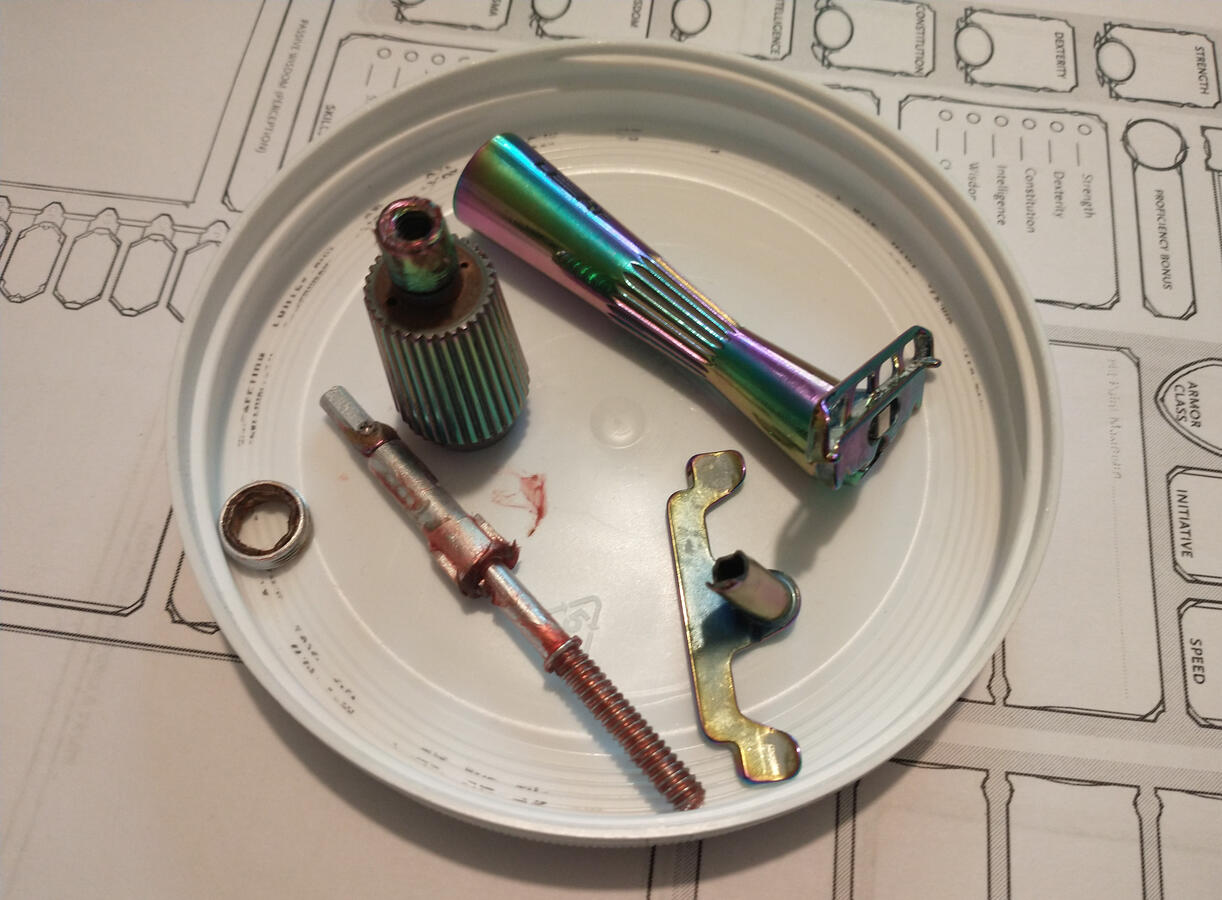
Inside, I can see the pretty slotted cylinder that makes the lid go swoosh off to the side. I think it is machined and not cast, but either way making the slot in the pipe is pretty difficult machining. I imagine that cool swoosh motion is a not insignificant component of the cost.
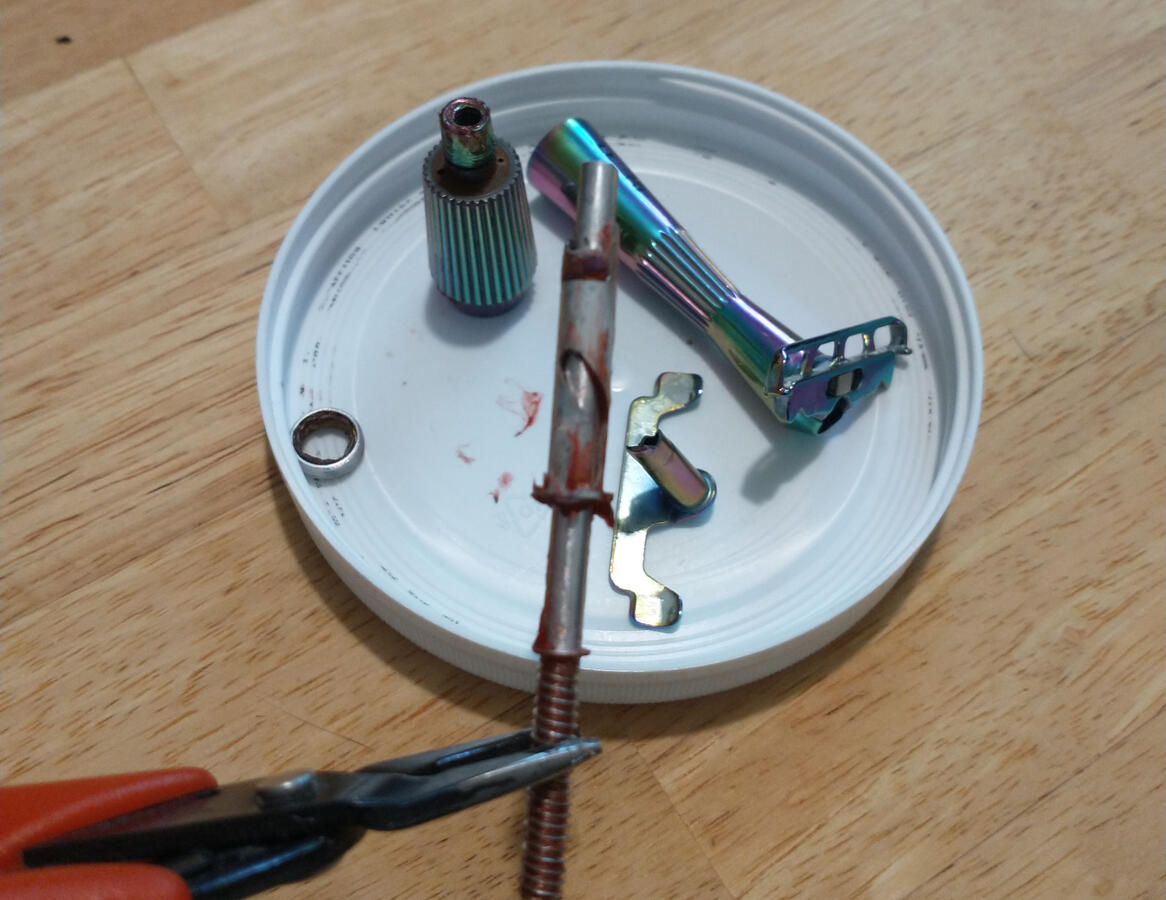
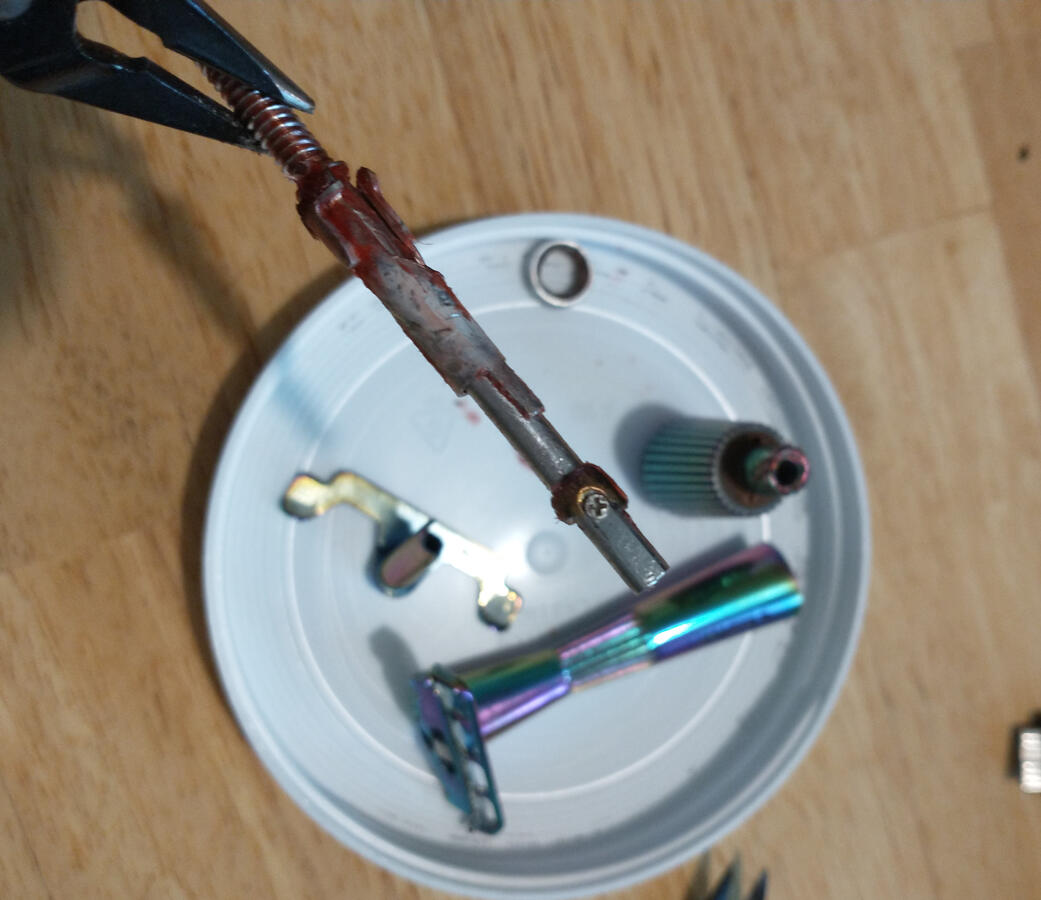
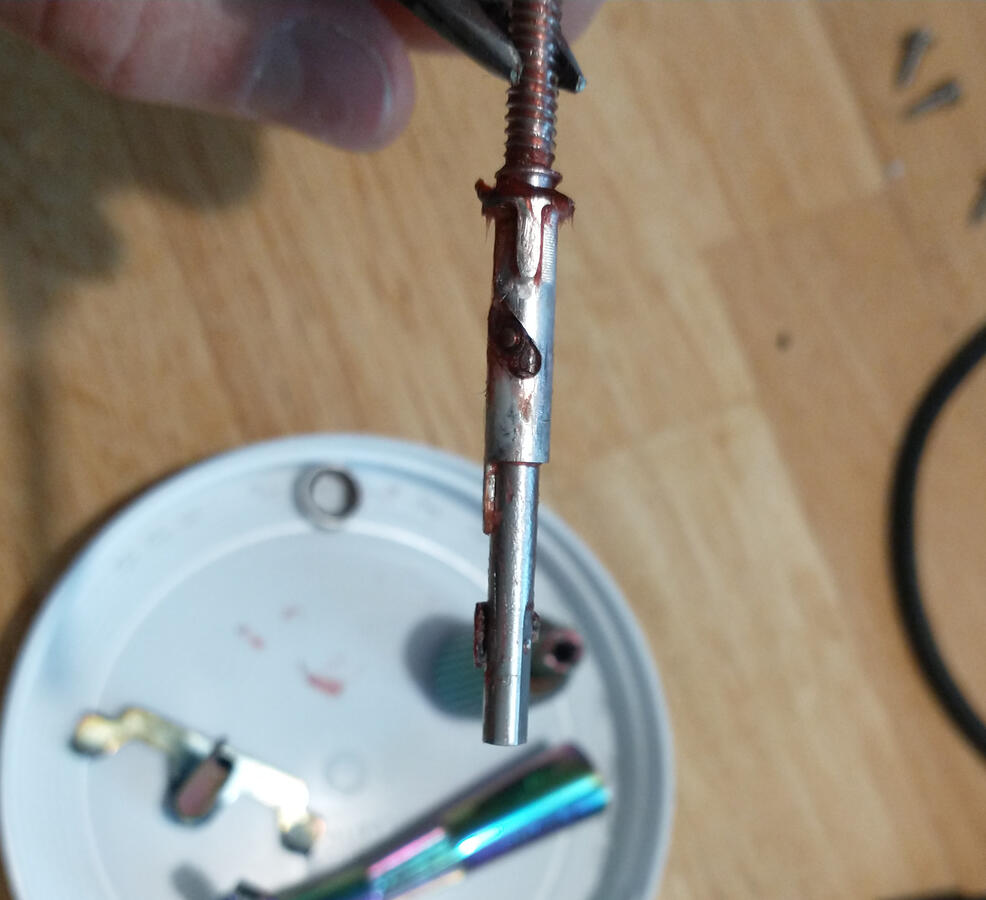
On the side of the main shaft, you can see the only screw that connects the cast blade lid. The tube feature of the lid that goes into the razor handle has a slot cut out of it so that it sits on either side of the main shaft, and then the screw hole is drilled through one of the sides.
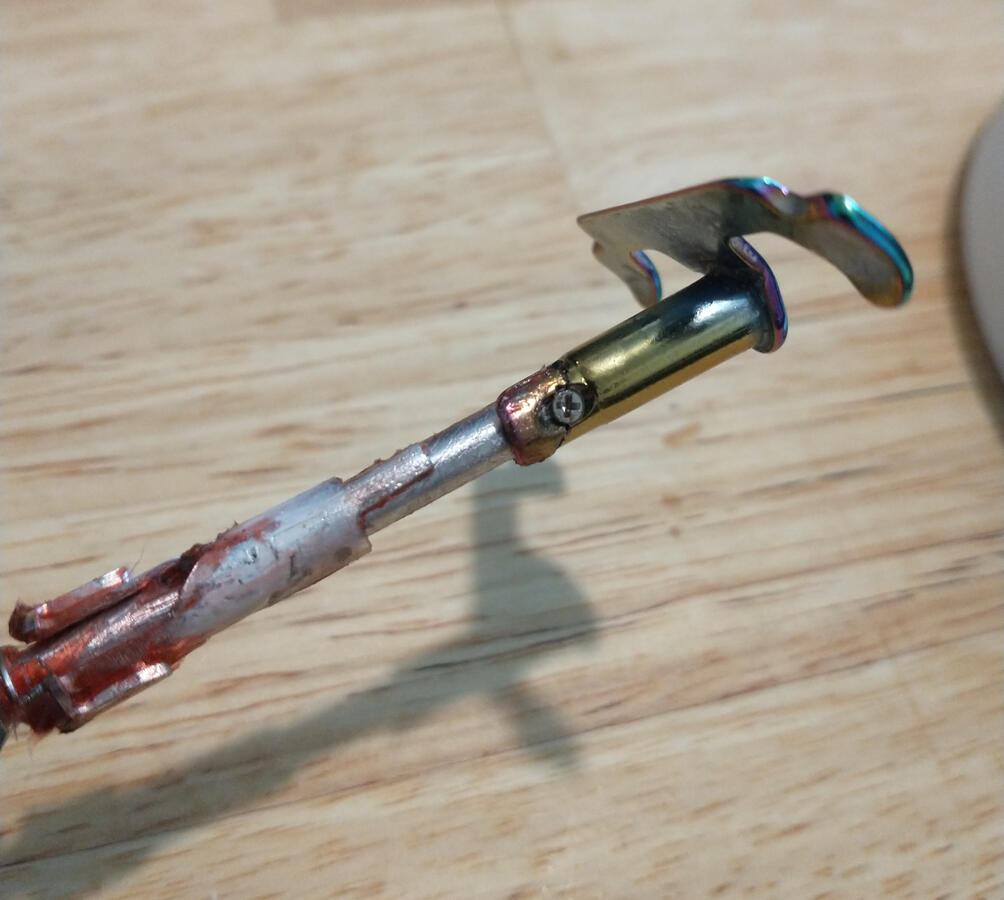
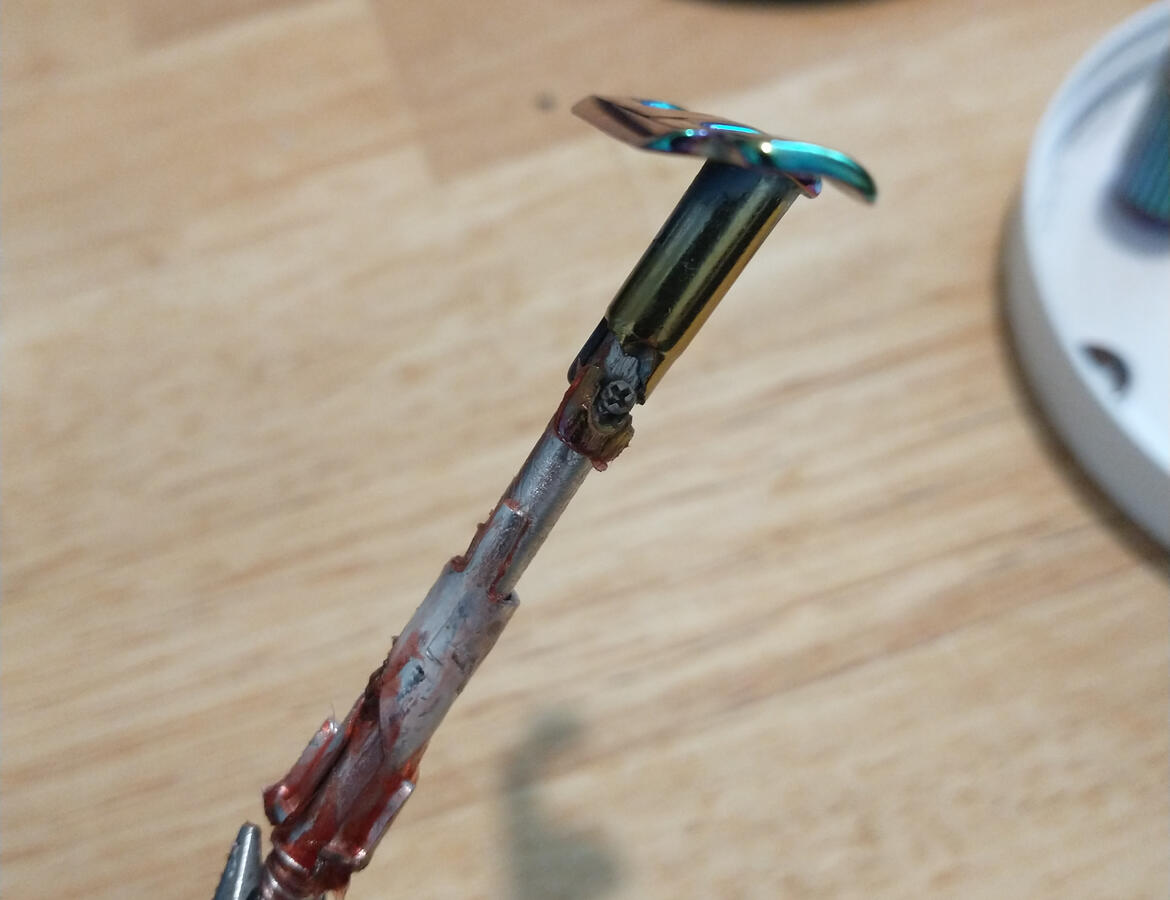
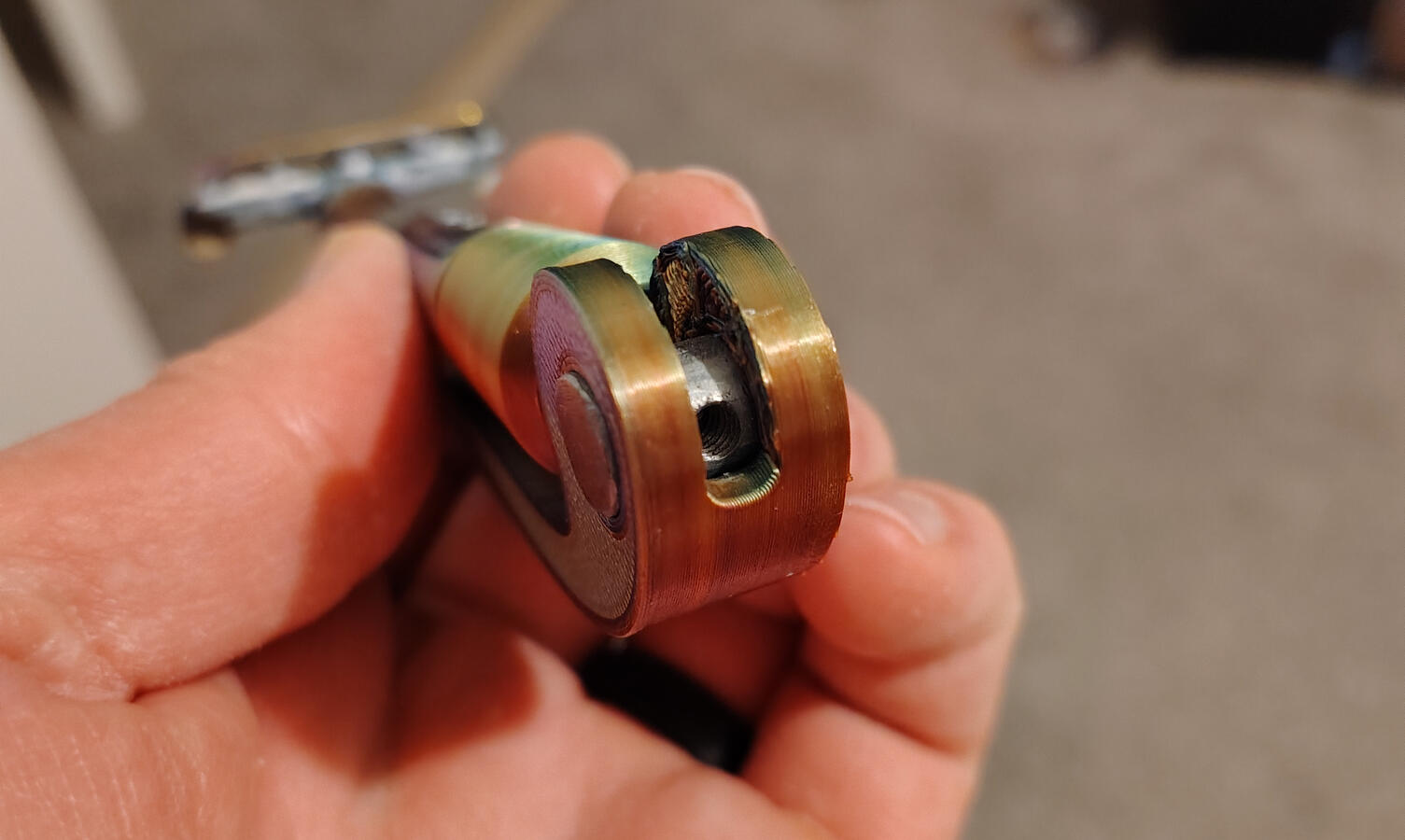
That means that the only bit of metal that is actually connecting the lid to the thing that pulls down on it is the little bit of metal on either side of the screw on this one side of the tube. That’s like 2 or 3mm^2 cross-sectional area, which you would think could be sufficient, but that screw hole also creates some problematic stress concentrations. If the hole just went all the way through the shaft so the screw went all the way through and supported the tube on both sides, that would effectively double the strength of the device, although I think there are other better options.
I actually like Leaf’s approach to razors, but the Twig needs serious work. If it were my company, I would issue an immediate recall. With a good twist, you can easily break the thing in an unsafe way.
Suggestions
This is a design blog, so now it’s design time. I have some ideas for improvement. In my opinion, the main issue with the design is the screw component. Even if the shaft was beefed up to prevent breaking, the user interface issues of not knowing how tight it is and accidental loosening would remain, but replacing the screw-tightening mechanism would fix all the problems.
My first idea is basically to get rid of the screw component, and replace it with a latching mechanism that is less adjustable.
Start with the same or very similar razor body, and put a cam latch on the back end of it that pulls a rod down through the razor. You can use the interfacing geometry to key the position of the cam latch’s seat against the handle so that it always latches in the same location. If you want to get really fancy, you can make the handle of the latch long and pretty and it can be part of an ergonomic handle or include a foot for standing it up on a counter.
The cam latch needs to provide at least 4mm difference in length between the closed and open positions for this to work. That sizing is super close to the mechanisms that are used in bicycle quick releases, and the bicycle quick-release shaft is basically the right size already, so you might be able to use one of those for reference or prototyping. The lid should have a hole in the end so that the shaft can be inserted through it, and the shaft can basically be a flat head machine screw flush with the surface of the lid.
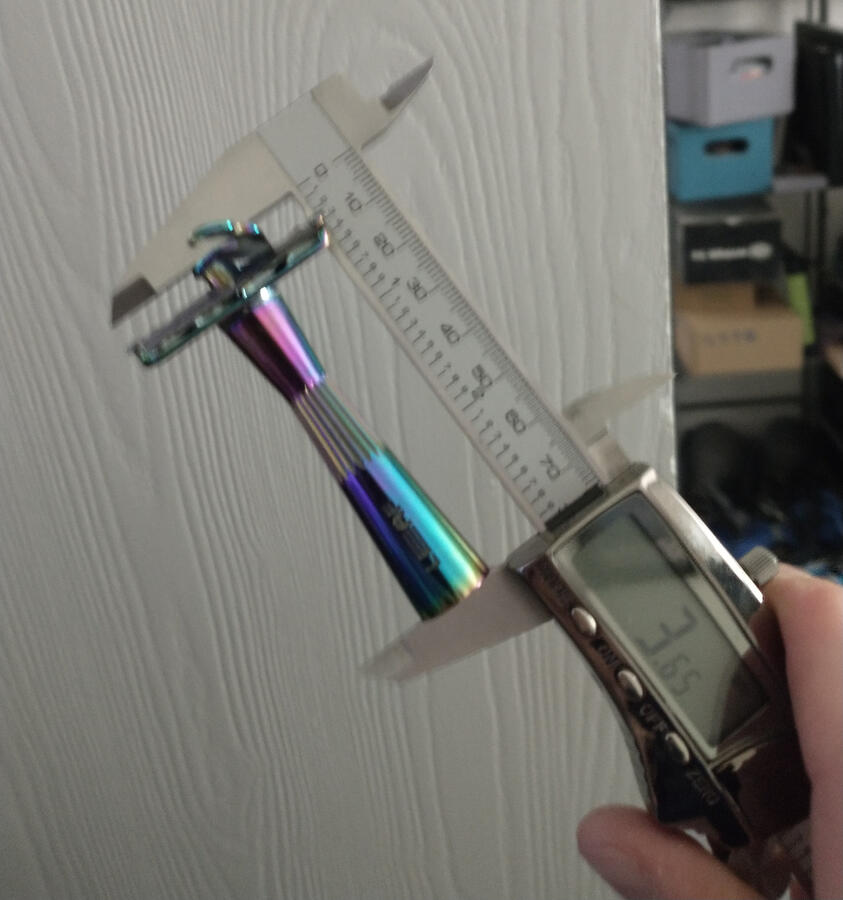
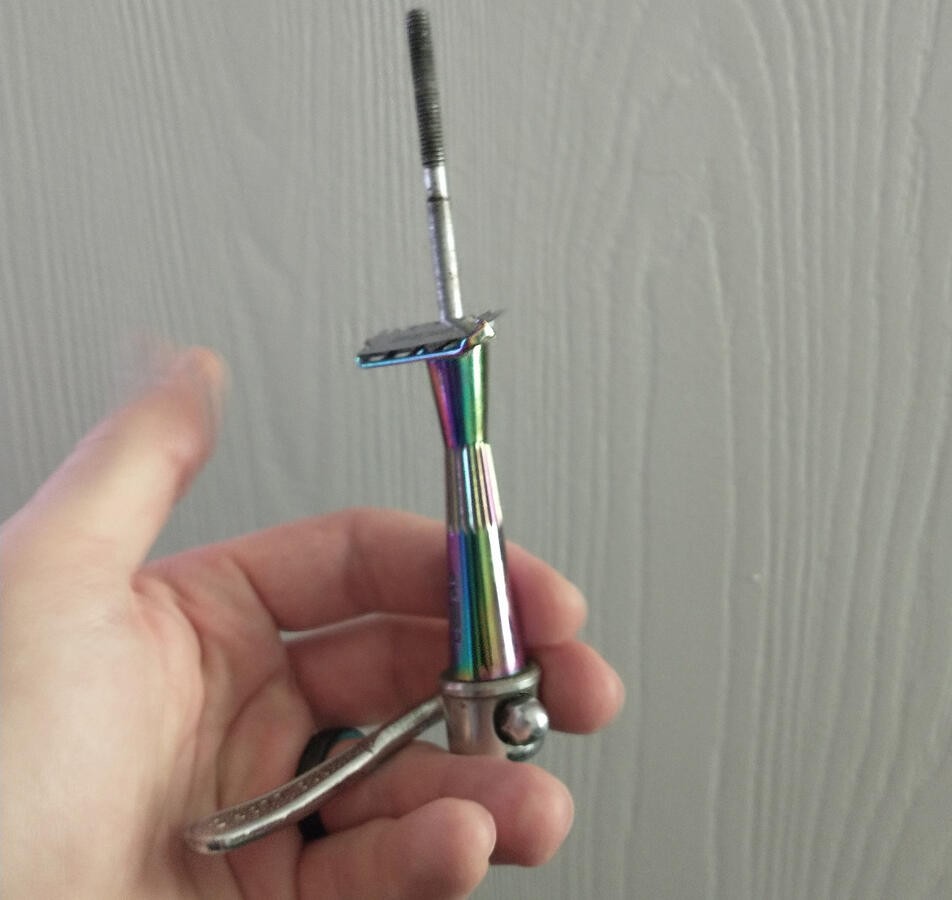
The threaded end of that fastener should go into part of the latch assembly. I think it would be cool if you could tension it like the spoke on a bicycle wheel, with a flat-head screwdriver tightening a nipple on the end of a threaded rod. The assembler could build it with the latch closed and use a torque wrench and a flat head driver to tension the latch to whatever position is required with a little bit of threadlocker, and it will then require a tool for the customer to alter the tension setting. The piece of metal applying the tensile force could be very small, like the size of a bicycle spoke, because it would have comparable cross-sectional area to the existing part.
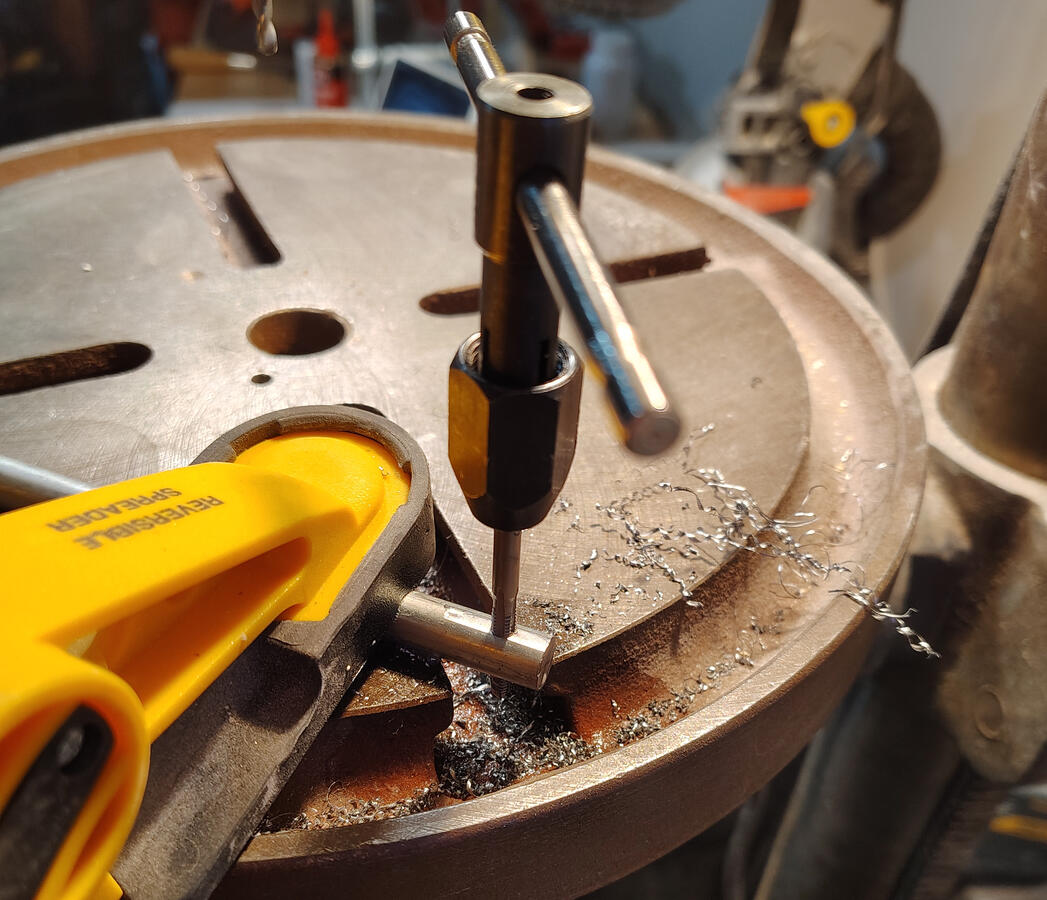
I used Onshape to CAD this up and 3D print a prototype. I saw that an M4 threaded rod fit perfectly into the lid tube, so I opted to use that instead of something like a bicycle spoke to keep it simple. I had some 3/8in round stock in my basement, so I used that for the cam axle, and I was able to thread it.
The user will open the cam of the latch, which will push the lid up. The lid is loosely fit around the shaft, so the user can just turn the razor upside-down and the lid will fall up, then rotate around the back side and out of the way so that the user can access the blade. The magnet for the blade is a great idea, definitely leave that. The user can then just put the razor right-side-up, rotate the lid so it drops back into place, and then cam the latch closed to hold the blade down. The latch mechanism could have a stable equilibrium in its latched state so that the user has feedback that it is latched properly, but if it had a long flat spot at the end that would be fine too.
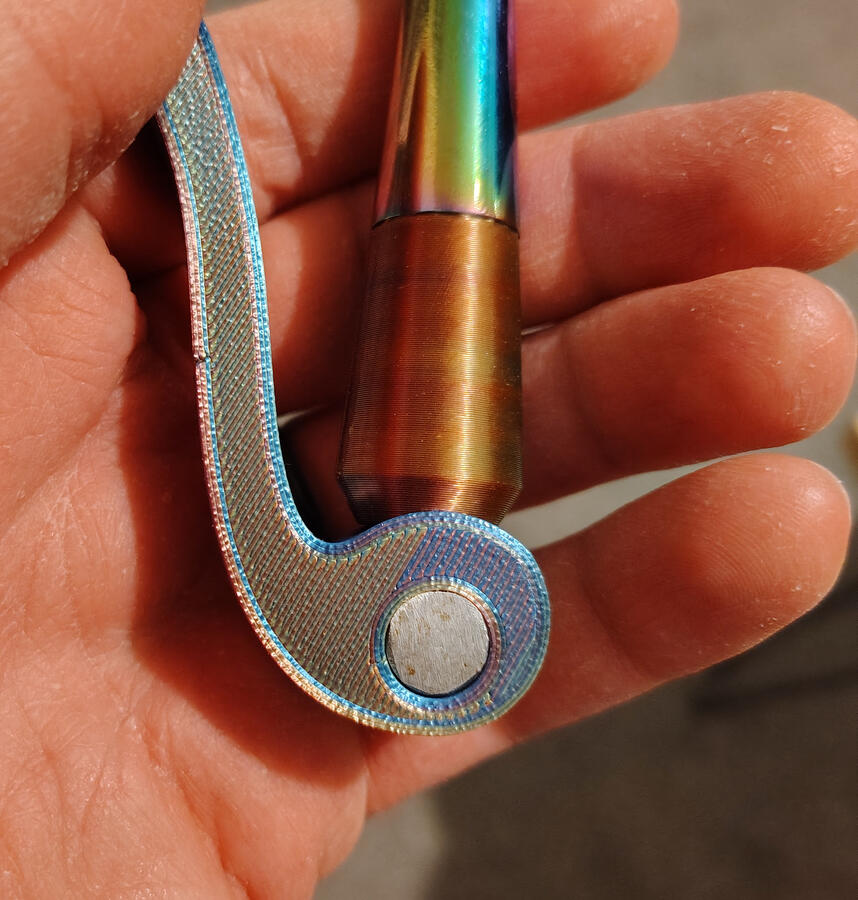
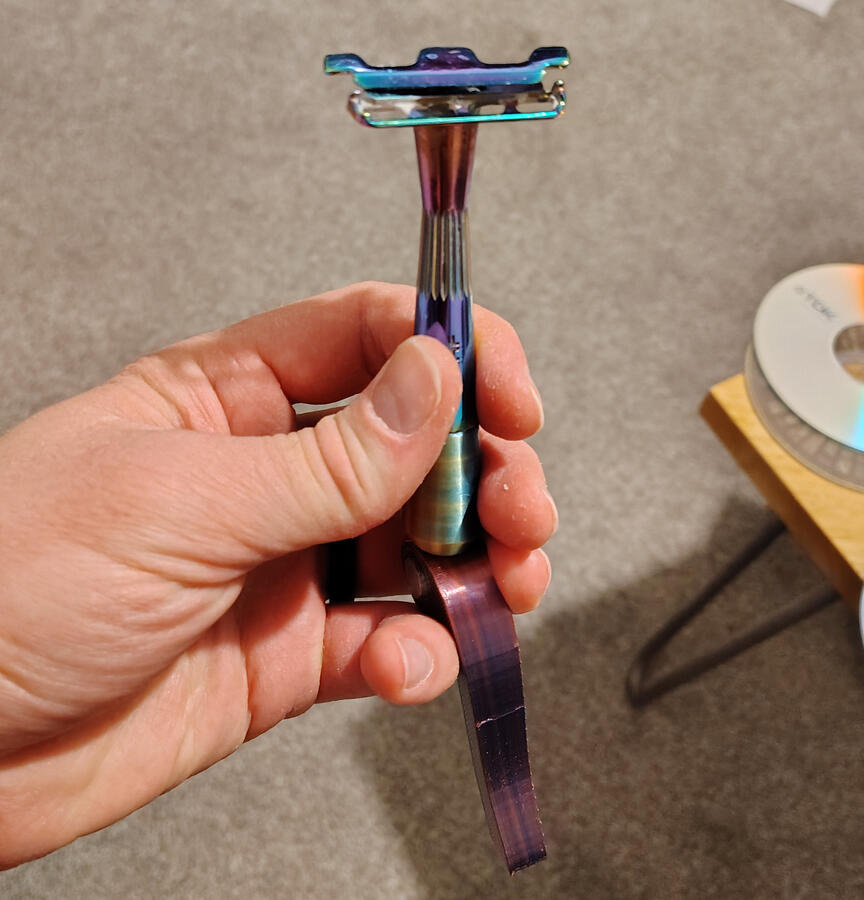
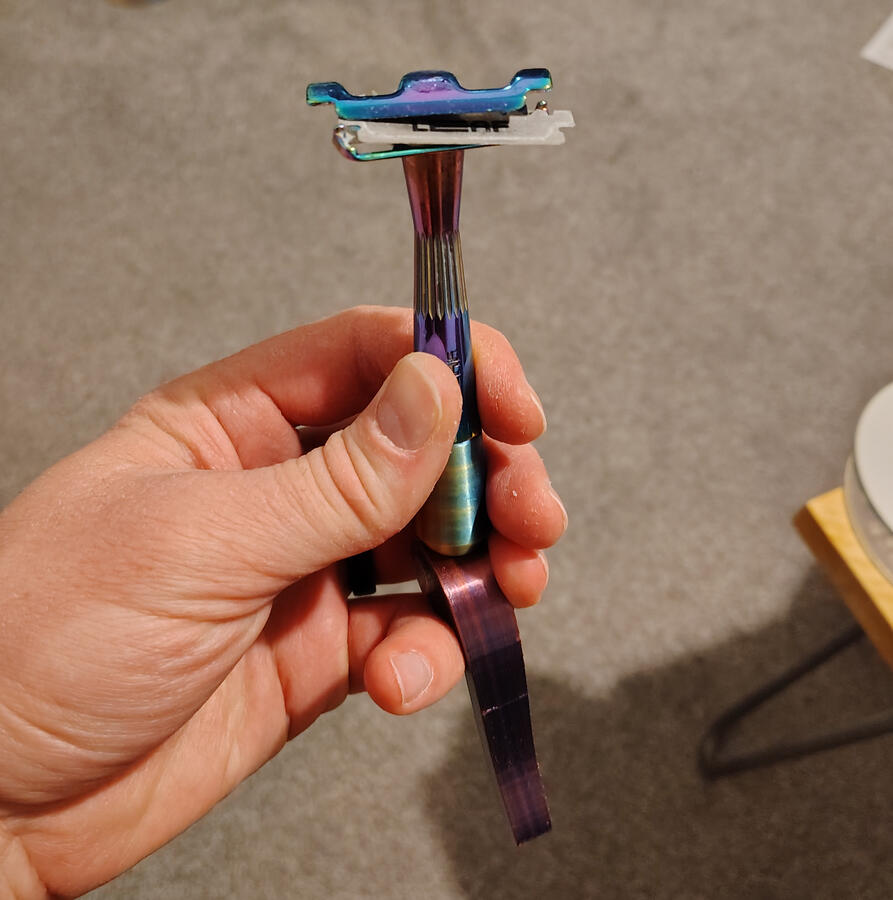
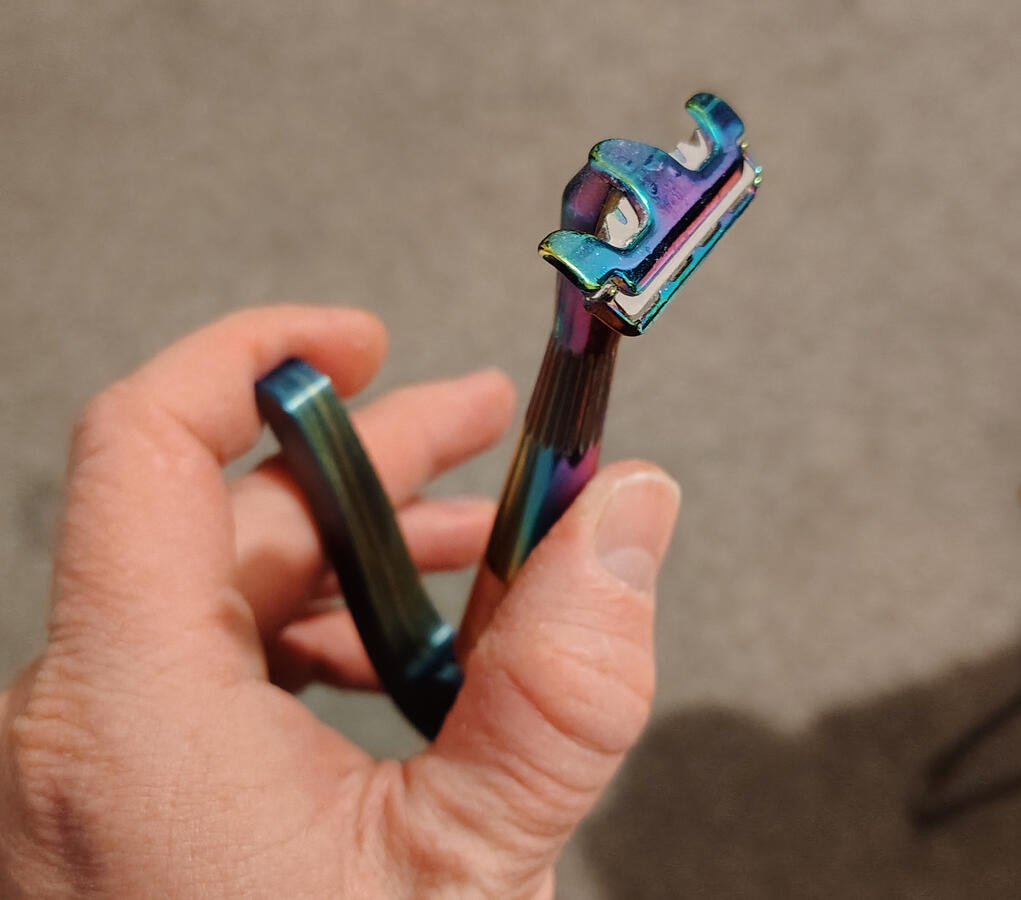
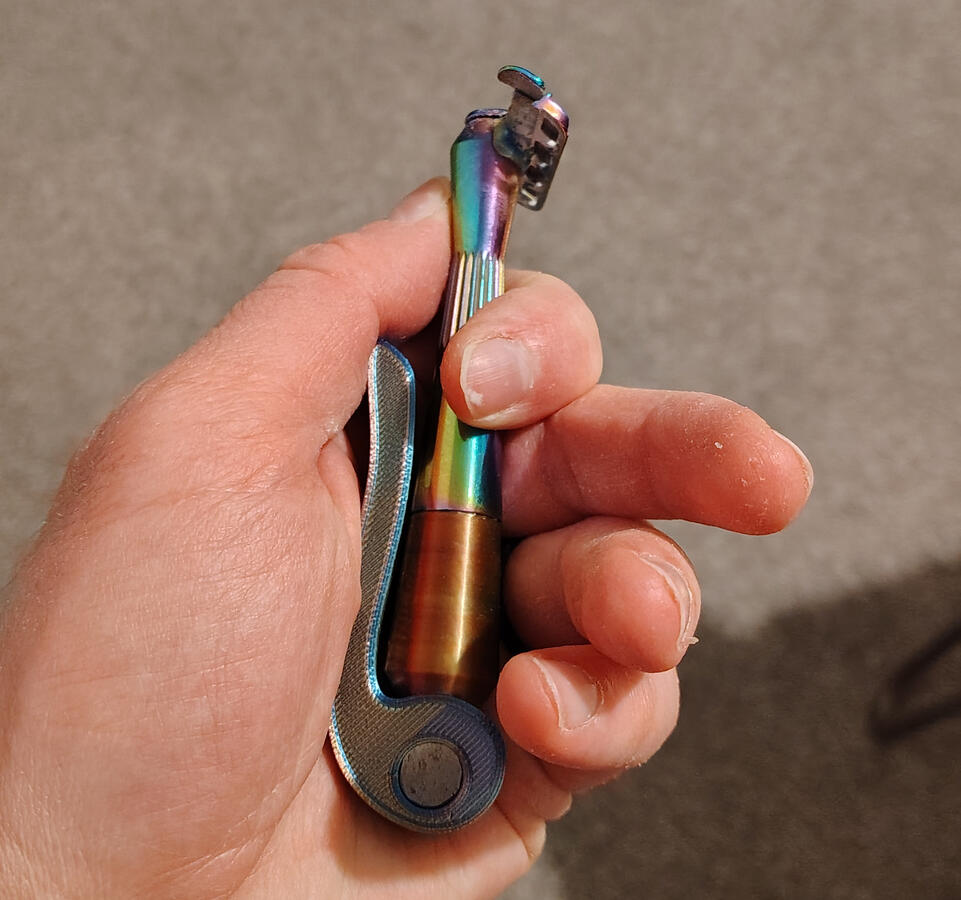
I 3D printed all the parts with ERYONE Silk Tricolor Coextrusion PLA so that the color and iridescence almost exactly match the original. The parts are a tight press-fit, which works just fine.
Further improvements
This is a prototype, and there are some things I would like to improve about my own design. If I have some time to do it, I might just do a 2nd prototype since I’m planning to use it a long time, but for now this prototype is working well for me day-to-day.
I eyeballed the lever and didn’t include any geometry to connect it with the handle, so I have to kind of hold it open to change the blades. There should be a channel in the lever and a follower on the handle that come together to hold the lever onto the handle when it is opened.
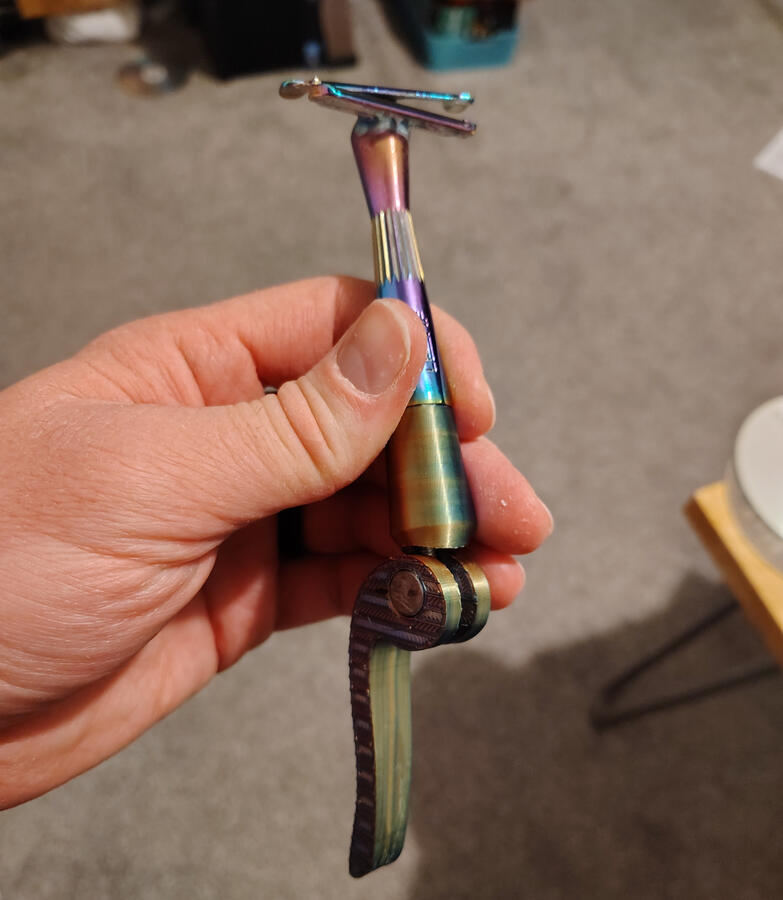
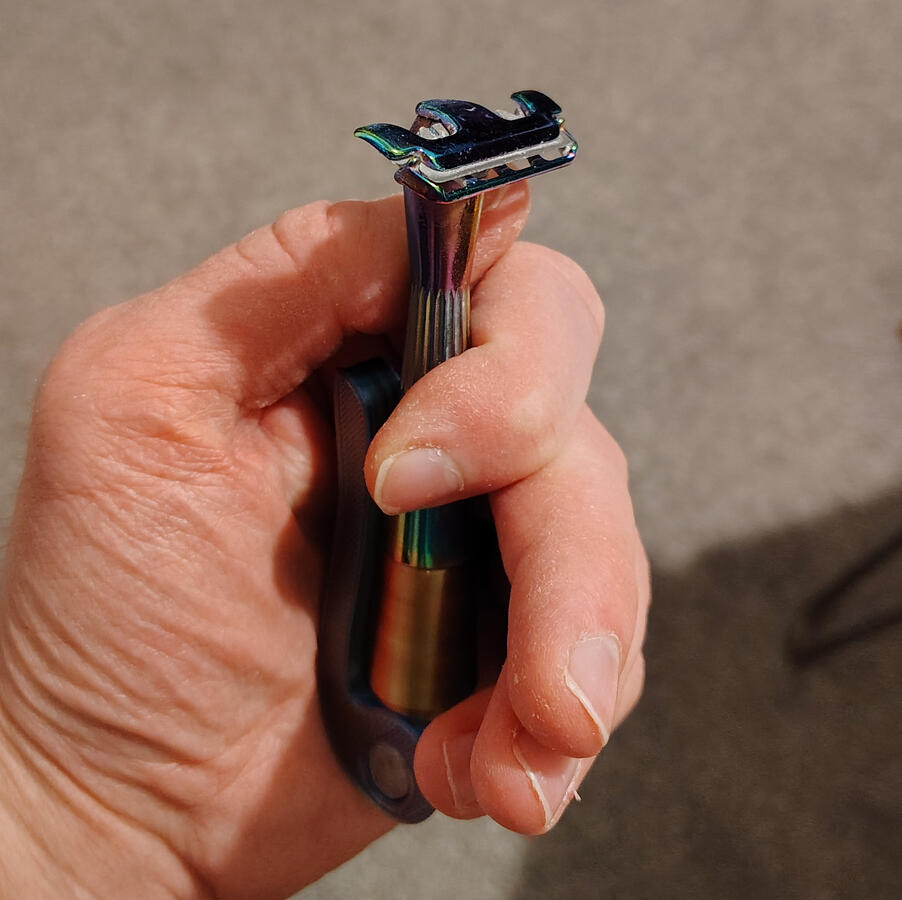
If the lever was made of metal and not hollow plastic, it could be a lot smaller and any interfacing geometry could be really smooth.
If I were re-designing the lid part, I would key the lid with a triangle on the back outside of the lid tube and a corresponding notch in the handle tube. The lid is already keyed because it mates with the blade holder, but adding a deeper, triangular key would give a surface to push the lid up when the user rotates it. Having a deep triangular key could also allow the user to feel any slop if the mechanism becomes loose somehow, because the lid would shift slightly.
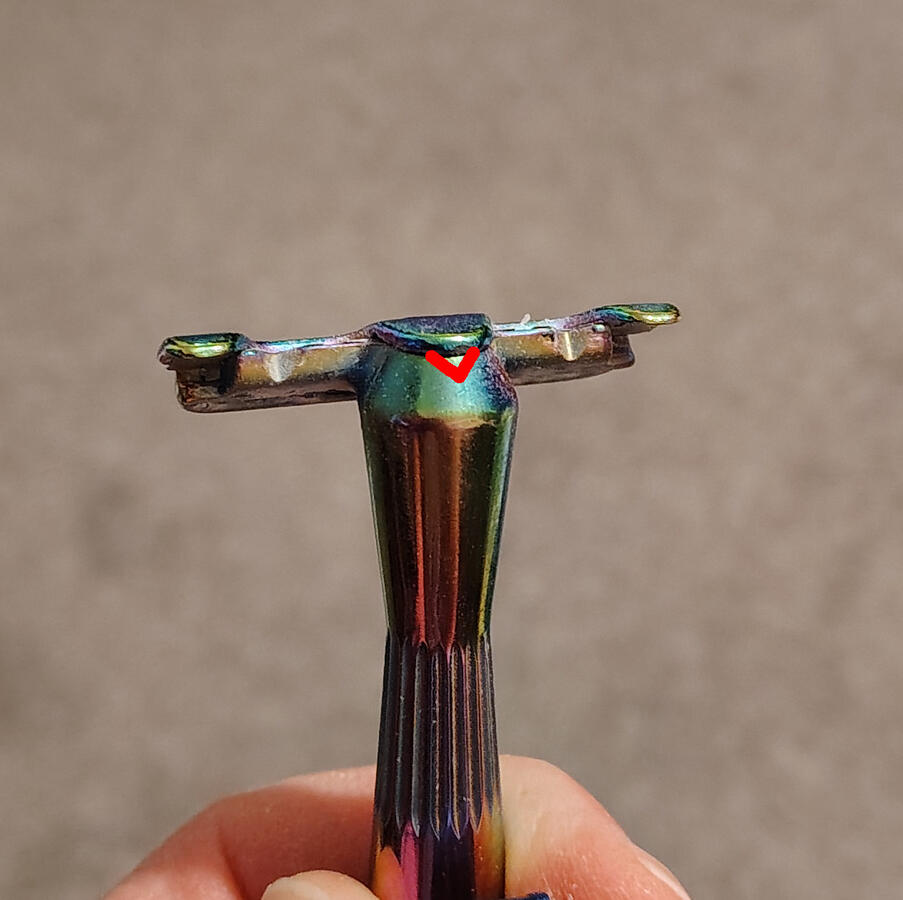
Also I would give it little feet or a flat bottom or something on the lever so that it stands up on the counter on its own like a little lizard.